
KEYNOTE SPEAKERS
26 MAY (Mon)
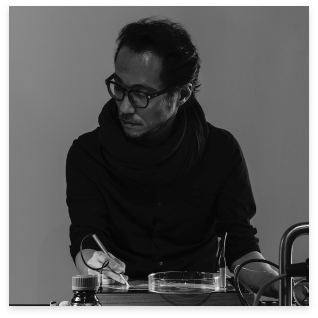
Transmattering
• Time : 13:00-14:00
• Venue : SNU Museum of Art (Auditorium)
• Author : Yunchul Kim (Artist)
• Abstract
Mattereality is the core-concept of my art world, recognizing matter as an active agent with inherent agency, co-directing the creative process rather than being passively manipulated. In this perspective, artist and material engage in mutual dialogue, forming a complex network of influence where matter expresses itself through physical, chemical, and temporal properties. Mattereality views matter as “reality in process” – existing in continuous transformation rather than static states. This fluid conception aligns with quantum physics’ relational ontology, reimagining matter as an “event” rather than fixed object. This approach challenges human-centered creativity by understanding artworks as negotiations between human and non-human agents rather than mere implementations of artistic intention.
Building upon this foundation, Crossmorphing is describing the bidirectional transformation process where artistic activities in which research and practice intersect with and are transformed by other disciplines such as technology, science, philosophies and so on. While encompassing transdisciplinary research, Crossmorphing emphasizes the bi-directional process of mutual transformation that goes beyond simple collaboration. This process illuminates how art maintains its essence while expanding through intersections with science, technology, and other domains. The resulting methodological blending functions as a mechanism of cultural evolution, as artistic approaches intermingle with diverse disciplines to create new possibilities.
Transmattering is the core-concept defining the process by which materials transform from natural states into cultural artifacts with new meanings through artistic experimentation. Moving beyond physical transformation, Transmattering encompasses evolving meaning, value, and concept embedded in materials. This journey from natural substance to cultural artifact occurs through artistic interventions that reimagine matter’s significance. The concept highlights how materials gain cultural meaning through their transformation, tracing the pathway from nature to artifice through creative engagement with matter’s inherent properties.
Collectively, these three core-concepts redefine artistic practice beyond human-centric creation, positioning Mattereality as the foundational insight that unfolds into Crossmorphing and Transmattering—methodological approaches that recognize agency beyond the human realm.
27 MAY (Tue)
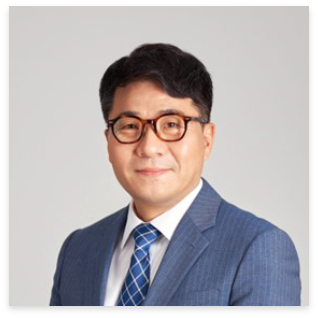
Art in the Age of Artificial Intelligence: Revenant, the One Who Returns
• Time : 13:00-14:00
• Venue : SNU Museum of Art (Auditorium)
• Author : Sang Yong Sim (Director, Seoul National University Museum of Art)
• Abstract
The technological revolution is poised to allow the emergence of a new kind of human cyborg like, the so called post human a species that, on multiple levels, overcomes the vulnerabilities of the human condition. There is growing anticipation that the age of AI will serve as the engine powering this hypothesis. Will artificial neural networks and deep learning supplement the uniqueness of human creativity—or threaten it? As generative AI rapidly dissolves the boundaries that once delineated the realm of creation, it now encroaches upon the domain of art itself.
The era of AI-generated art is now officially declared. Just as art has always evolved, it will continue to change—seemingly without surprise or resistance. But what happens when even matters requiring high-level judgment and foresight are delegated to AI? In such a case, the foundations of human free will and the core principles of a free society may be undermined, potentially facing a profound crisis. Increasingly, concern grows over the possible twilight of the human era.
The age of AI holds a high likelihood of becoming an era marked by distortion and deception—difficult to control. Opportunities to confront the truth may become more suppressed, while the voices of falsehoods will echo further and louder. For this reason, it is not ‘intelligence‘ (知能) that we must return to, but ’intellect’ (知性), and beyond intellect, to a ‘higher intellect.’ To summarize: Intellect is the ability to open new realms of understanding, whereas intelligence is the ability to utilize knowledge and skills. A higher intellect is one imbued with character and the possibility of moral discernment. To recover this, humanity must pass through and return from the brink of its ‘Own death.‘ This return is built upon an awakening from the ‘Dark night’ ushered in by modern Enlightenment rationality through a vigilant awareness of reality and a renewed longing for truth.
28 MAY (Wed)
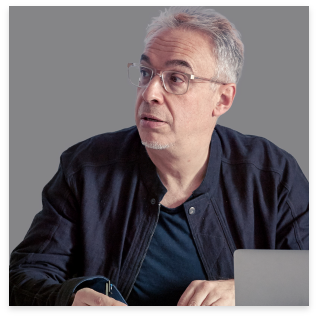
Artificial Aesthetics: Generative AI, Art and Visual Media
• Time : 13:00-14:00
• Venue : SNU Museum of Art (Auditorium)
• Author : Lev Manovich
• Abstract
Artificial Aesthetics: Generative AI, Art and Visual Media, explores the impact of generative AI on artistic creation and media theory. Based on research conducted between 2019 and 2024, the book presents new possibilities for art and aesthetics in an era where AI is emerging as a creative agent.
Manovich examines how AI image generation reshapes traditional concepts of art, arguing that it creates a new relationship between “machine” and “creativity” within the realm of visual arts. He explains how AI is not only a tool but is increasingly positioned as a co-creator in the artistic process.
Consistent with his earlier work, this book provides a deep analysis of how digital media and AI transform both the production and consumption of art and media. It analyzes how AI generates artworks through data science and visualization, proposing new aesthetic frameworks.
Manovich’s previous research has focused on the effects of digital media and AI on art and culture, and this book expands on that foundation. It offers insight into the evolving role of AI as a creative subject, presenting a critical yet forward-looking perspective on the future of art and aesthetics in the age of artificial intelligence.